


Walk the Vicksburg battlefield in the morning and watch the sun set over the Mississippi from your balcony that night. A Civil War river cruise brings American history to life — no passport needed.
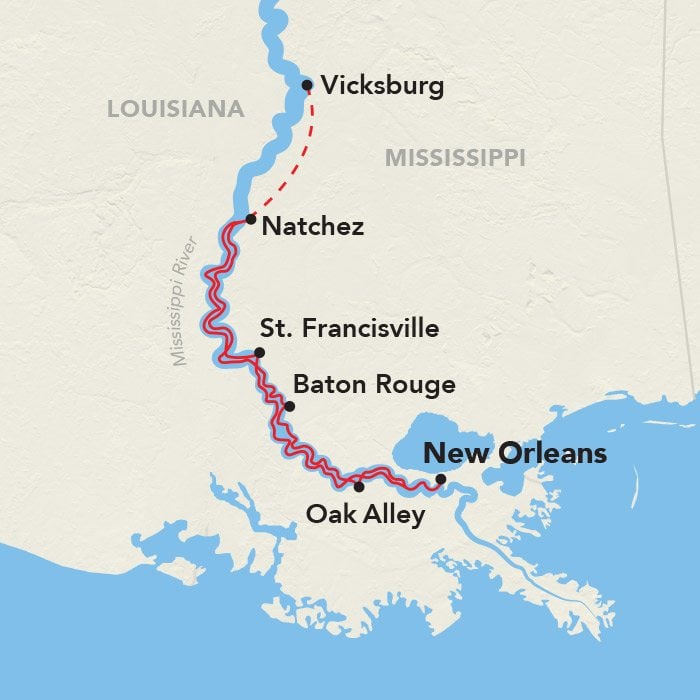
A Civil War river cruise on the Lower Mississippi sails between New Orleans and Memphis, stopping at the towns and battlefields that decided the war in the West. For veterans who’ve read every book on Grant’s Vicksburg campaign, it’s a chance to finally stand on the ground. For spouses and families, it’s an easy, relaxing trip through Southern history, music, and food.
At a glance: The best Civil War river cruise sails the Lower Mississippi between New Orleans and Memphis on American Cruise Lines or Viking, with stops at Vicksburg National Military Park, Natchez, and other antebellum river towns. Most sailings run about 8 or 9 days, need no passport, and qualify for our military and veteran discount.
Table of Contents
Why American Cruise Lines for a Civil War River Cruise
American Cruise Lines (ACL) is the largest river cruise line in the U.S., and its ships are built, flagged, and crewed in America. On its Lower Mississippi itineraries, an onboard historian gives a lecture the night before Vicksburg, so you arrive knowing exactly what you’re looking at.
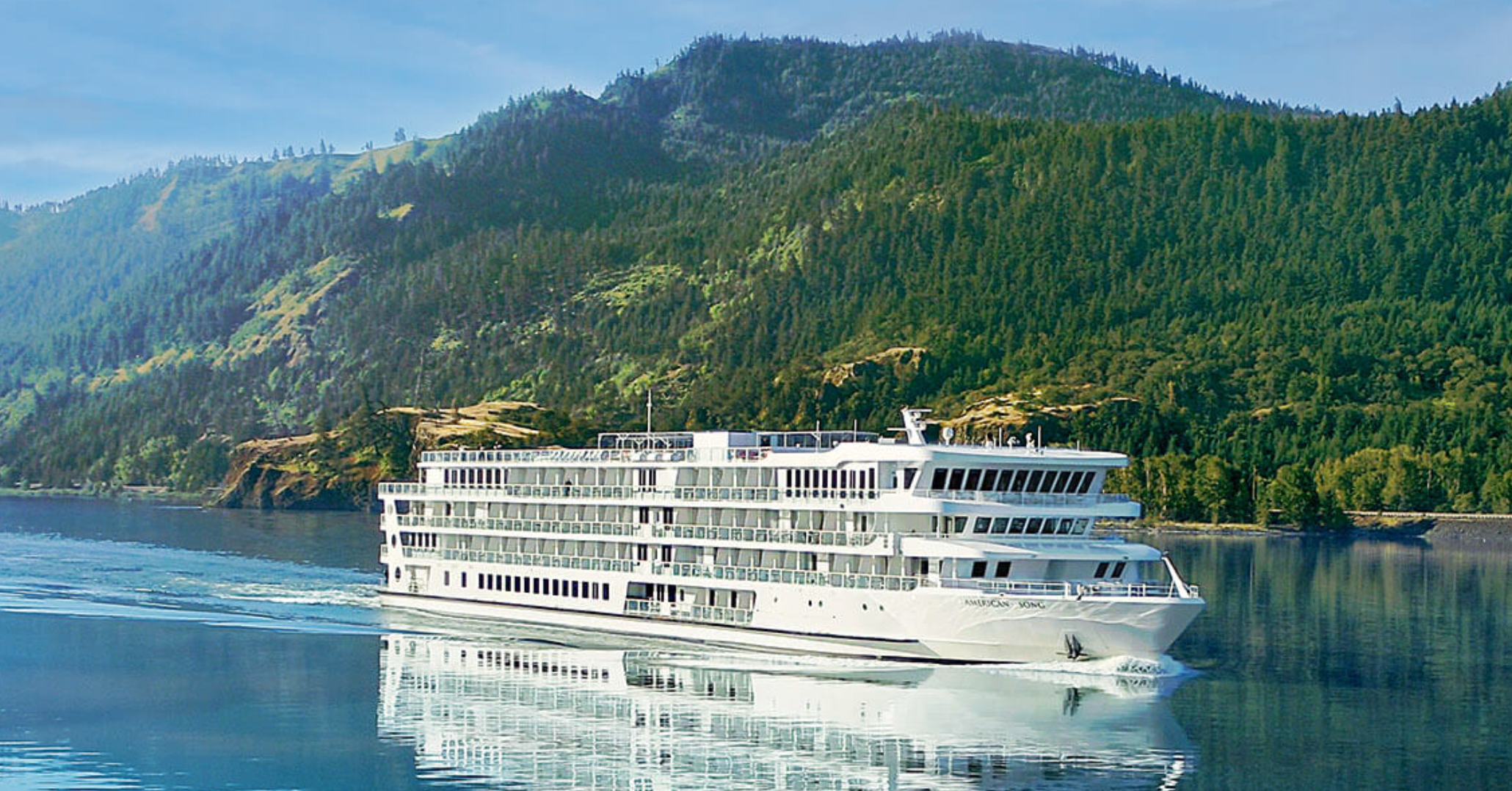
- Small riverboats of around 150–190 guests, with every stateroom facing outside and many with private balconies
- Guided tours in port, onboard lectures, and evening entertainment featuring the music of the region
- A pre-cruise hotel night in your departure city on most itineraries
- No passport, no jet lag — fly into New Orleans or Memphis and you’re there
We book a lot of veterans on American Cruise Lines. See our American Cruise Lines military discount page.

Civil War and American History Stops on the Lower Mississippi
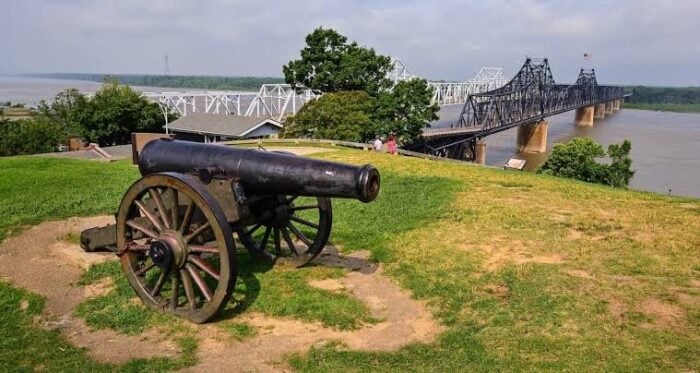
- Vicksburg, Mississippi — the highlight. Tour Vicksburg National Military Park, site of the 47-day siege that ended with the city’s surrender on July 4, 1863 and gave the Union control of the Mississippi River. The park includes miles of earthworks, hundreds of monuments, and the ironclad USS Cairo.
Cruises that stop in Vicksburg: from New Orleans · from Memphis - Natchez, Mississippi — one of the best-preserved antebellum towns in the South, which surrendered without a fight and still has dozens of pre-war homes.
Cruises that stop in Natchez: from New Orleans · from Memphis - Baton Rouge and St. Francisville, Louisiana — Louisiana’s capital and the plantation country along River Road (stops vary by itinerary).
Cruises that stop here: from New Orleans · from Memphis - Memphis, Tennessee — Beale Street, Graceland, and the National Civil Rights Museum.
Cruises departing Memphis: all Memphis sailings - New Orleans — and, before or after your cruise, The National WWII Museum, a must for any veteran.
Cruises departing New Orleans: all New Orleans sailings
Compare Lower Mississippi cruises by line: American Cruise Lines from New Orleans or from Memphis · Viking Mississippi from New Orleans or from Memphis. Most Lower Mississippi sailings visit Vicksburg, Natchez and either Baton Rouge or St. Francisville — we’ll confirm the exact stops for your dates.
The Siege of Vicksburg: How the Confederacy Lost the Mississippi
By the spring of 1863, Vicksburg was the last major Confederate stronghold on the Mississippi River. Perched on high bluffs above a sharp bend in the river, its batteries could fire on any Union ship trying to pass.
As long as Vicksburg held, the Confederacy stayed connected to Texas, Arkansas, and Louisiana, along with the men, cattle, and supplies they sent east. President Lincoln called Vicksburg “the key” and believed the war could not be won until it was in Union hands.
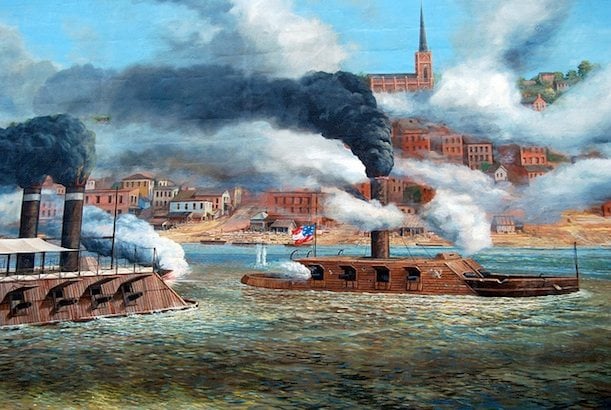
Taking it was no easy job. After months of failed attempts from the north, Major General Ulysses S. Grant made a daring move in April 1863: he marched his army down the Louisiana side of the river while Admiral David Dixon Porter’s gunboats ran past Vicksburg’s guns at night.
Grant crossed the Mississippi below the city, won five battles in less than three weeks, and drove Lieutenant General John C. Pemberton’s Confederate army back inside Vicksburg’s defenses.
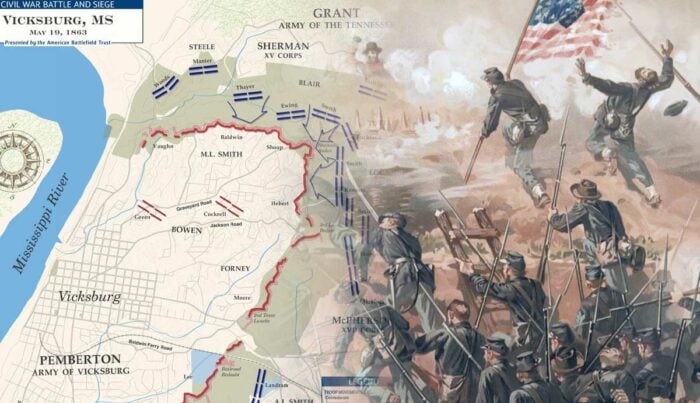
Grant attacked those defenses head-on on May 19 and again on May 22, and both assaults were thrown back with heavy losses. So he dug in and laid siege. For 47 days, Union artillery and Porter’s gunboats shelled the city day and night. Many residents moved into caves dug into the hillsides, and soldiers and civilians alike were reduced to eating mule meat as food ran out.
On July 4, 1863 — the day after the Union victory at Gettysburg — Pemberton surrendered Vicksburg and roughly 29,000 Confederate soldiers. Five days later, Port Hudson, Louisiana, the last Confederate post on the river, surrendered too. The Union now controlled the entire Mississippi, and the Confederacy was split in two. Together, Vicksburg and Gettysburg are remembered as the turning point of the Civil War.
Today, Vicksburg National Military Park preserves the siege lines, more than 1,300 monuments and markers, and the recovered Union ironclad USS Cairo. Walking those lines with a historian, after hearing the story aboard your riverboat the night before, is the highlight of the trip for many of the veterans we send there.
See all American Cruise Lines river cruises »
Prefer Viking? Viking Sails the Mississippi Too
Viking’s 386-guest Viking Mississippi sails Lower Mississippi itineraries between New Orleans and Memphis, also with time in Vicksburg and Natchez. It’s a larger, more modern ship in Viking’s Scandinavian style. See Viking Mississippi sailings »
More American History River Cruises
American Cruise Lines also sails the Columbia and Snake Rivers in the Pacific Northwest, following the trail of Lewis and Clark. Ask us about other history-focused itineraries in the East and Southeast too — we’ll match the trip to the history you’re most interested in.
When to Take a Civil War River Cruise
Spring (March–May) and fall (October–November) are the most comfortable times on the Lower Mississippi, with milder temperatures for walking the battlefield. Summer is hot and humid but brings lower fares on some dates. See every Lower Mississippi sailing, lowest price first »
- Spring (March–May): Spring 2027 sailings · Spring 2028 sailings
- Fall (October–November): Fall 2026 sailings (a few last-minute dates left) · Fall 2027 sailings
- Summer (June–August): Summer 2027 sailings
Your Military Discount on a Civil War River Cruise
We apply our military and veteran discount to American Cruise Lines and Viking Mississippi sailings, on top of the cruise line’s own promotions. It’s for U.S. and Canadian active duty, retired military, veterans, and their spouses — plus the friends and family traveling with you.
Bring Your Reunion Group or Post
A Lower Mississippi cruise is an easy domestic trip for a unit reunion, a VFW or American Legion post, or a Civil War round table. Ask about group space.
★ Why Book Your Civil War River Cruise With Military Cruise Deals?
We’re Mitch, Kevin, and Hope — a military-family-owned, owner-operated agency that has specialized in cruise discounts for active duty, veterans, and their families since 2001. We’re not a call center: when you call, you talk to one of us, and we stay with you from your first question until you’re home again.
We are river cruise experts who’ve been on river cruises and toured dozens of river cruise ships, including Viking, AmaWaterways, Avalon, and Uniworld — so our advice comes from real experience, not a script.
Ready to book or have questions? Call 866-964-5482 or send us a message.
Civil War River Cruise FAQs
Which river cruises visit Civil War sites on the Mississippi?
American Cruise Lines’ Lower Mississippi cruises between New Orleans and Memphis stop at Vicksburg, where guests tour Vicksburg National Military Park, as well as Natchez and other antebellum river towns. Viking also sails the Lower Mississippi on its Viking Mississippi.
How long is a Civil War river cruise on the Mississippi?
Most Lower Mississippi cruises between New Orleans and Memphis are about 8 or 9 days, including a pre-cruise hotel night.
Do I need a passport for a Mississippi river cruise?
No. American Cruise Lines sails only within the United States, so U.S. citizens need a government photo ID, not a passport.
Is there a military discount on American Cruise Lines?
Yes. Military Cruise Deals applies its own military and veteran discount to American Cruise Lines sailings, and it extends to the friends and family traveling with you.
When is the best time for a Civil War river cruise?
Spring (March–May) and fall (October–November) are the most comfortable times on the Lower Mississippi, with milder temperatures for walking the Vicksburg battlefield. Summer is hot and humid but brings lower fares on some dates.
Can I book a Civil War river cruise for a reunion group?
Yes. A Lower Mississippi cruise is an easy domestic trip for a unit reunion, a VFW or American Legion post, or a Civil War round table. Ask us about group space.